
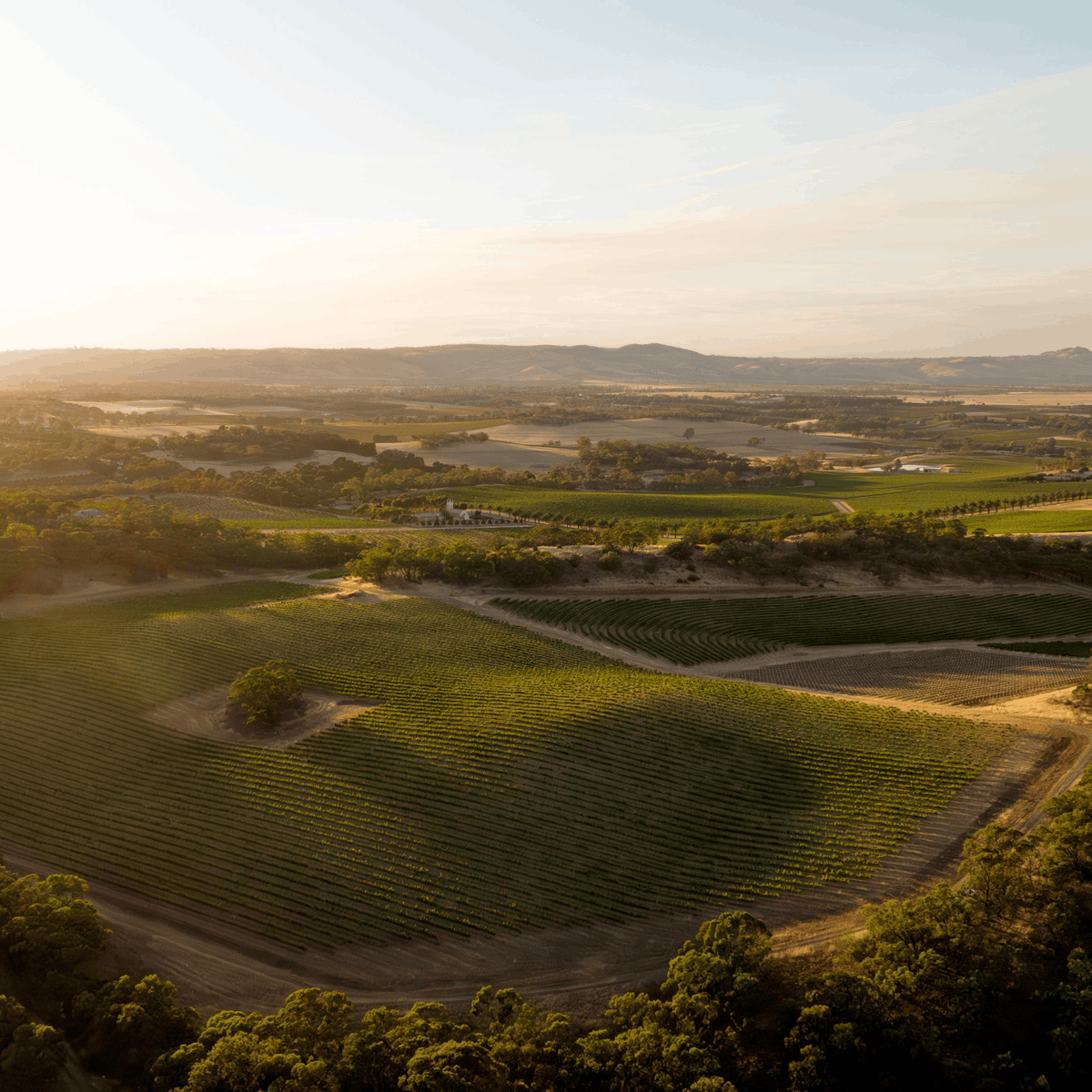
Twenty-two vintages in, we did something here at Marananga we had wanted to do for a long time. In March 2026, in the middle of vintage, we put in our own bottling line.
On paper it reads like a piece of plumbing. It isn’t. It closed the last gap in the chain.
From the 2026 vintage, every Tscharke wine is grown, produced, aged and bottled inside the same few hundred metres of the Barossa Valley. Fruit is hand picked off our blocks on the Western Ridge, fermented here, aged in The Underground beneath our feet, and filled into glass here. Nothing goes on a truck until it is a finished bottle with a label on it.

What “estate grown, produced, aged and bottled” actually means
Estate grown, produced, aged and bottled means one producer owns or controls the vineyard, makes the wine, matures it and fills it into bottle on the same property, with the wine never leaving that site in between.
In the United States, “estate bottled” is a regulated term. A winery can only use it if it owns or controls all of the fruit and crushes, ferments, finishes, ages and bottles the wine in the one place, inside the same viticultural area.
Australia has no equivalent rule. Nobody here regulates the word estate, which is exactly why it is worth spelling out rather than leaving you to take it on trust.
So rather than lean on a definition, we lean on certification. We are certified organic, biodynamic and regenerative, which means the way we farm and the way we make wine is audited by somebody other than us.
Here is the chain, spelled out.
- GrownOur own vineyards at Stone Well, Gnadenfrei and Greenock Creek. Certified organic, biodynamic and regenerative.
- ProducedHand picked, wild fermented in small open fermenters, in our wine shed.
- AgedSome in the winery. The rest in The Underground, five metres below the estate, sitting at 13 to 15°C all year without an air conditioner.
- BottledUsing our own bottling line, installed March 2026, metres from the tank.
- Stored & shippedFrom here.
The vessels
Not all of it goes underground. Some stays up in the winery. The rest goes down into The Underground, into rows of vessels running the length of the hall.
Four kinds, and plenty of each.
- FoudreLarge-format oak. Slow, even, and gentle on the fruit, because the ratio of wine to wood is so much higher than in a small barrel.
- TerracottaClay. A vessel form roughly eight thousand years old, and the only one here chosen for what it does not do. It adds nothing.
- Concrete eggNo flavour, no straight edges. The shape keeps the wine quietly moving on its own.
- HogsheadSeasoned oak barrels, for the parcels that want a little more shape.

That is the élevage: the raising of a wine between ferment and bottle. It is where a vintage becomes a wine. And in every one of them, the wine is filled, aged and emptied in place. Nothing gets shifted to suit a schedule.

One property. One team. One continuous process.
Seventeen kilometres
That is how far our wine used to travel to be bottled. Six small truckloads a year, seventeen kilometres each way.
It was never a long trip. That is exactly the point.
Even a run that short meant pumping finished wine out of the tank into a tanker, driving it, pumping it into another tank, running it through a line, palletising it and trucking it home again. Four or five handovers before a closure went on, and a bottling date locked in months ahead.
The distance was never the problem. The handling was.
Why moving wine is never neutral
Wine does not have to be spilled to be damaged. It only has to meet air.
Winemakers measure this at bottling as total package oxygen: the oxygen dissolved in the wine plus the oxygen trapped in the headspace under the closure. The Australian Wine Research Institute puts best practice below 1.5 mg/L. Between 1.5 and 2.5 mg/L is acceptable. Above 3 mg/L needs improvement, and above 4 mg/L is poor practice.
Here is the part that matters. A single milligram per litre of oxygen can cost a wine up to four milligrams per litre of free sulphur dioxide. That is the preservative doing the protecting, and it is spent in the first few months in bottle, long before anyone opens it.
Which is why the number matters more to us than to most. Organic certification caps the sulphur we can use at roughly half what a conventional winery is allowed. Less preservative means less margin for error. Every milligram of oxygen we do not pick up is worth more to a wine like ours than it is to one that can simply be topped up.
Then there is heat. Research on transport conditions has recorded daily temperature extremes as high as 57°C inside land transport. Wine expands and contracts roughly 0.3 mL for every degree, and that breathing motion draws air in past the closure. Sustained exposure above 25°C does permanent damage, stripping fresh fruit aromatics and pushing a wine toward cooked and oxidised characters. A tanker sitting in the sun on a Barossa summer afternoon is not a hypothetical.
Every surface it touches
There is one more risk, and for a winery like ours it is the one that matters most.
Wine that leaves the winery meets surfaces that are not ours. A hose, the inside of a tanker, a holding tank, a filler head, a line that ran something else last week. Every one of them is another surface where an organism can be waiting.
This is not a criticism of anybody. Sanitation in this industry is taken seriously, and the precautions are genuine and thorough. But a precaution manages a risk. It does not remove it. The only way to remove it is to not introduce the surface in the first place.
That matters more for wine made the way ours is. Certified organic and biodynamic means working with less sulphur, and less sulphur means less of a safety net against spoilage organisms. So the fewer unfamiliar surfaces our wine meets, the safer it is.
Every surface our wine touches now is one we cleaned ourselves.
The two numbers we watch at bottling
We run critical bottling analyses on site now. Two of them decide whether a wine is ready to fill.
Dissolved oxygen is the one above. It needs to be low and it needs to stay low, right through the run.
Dissolved carbon dioxide is the one most people have never heard of, and the window is narrower than you would think. Every still wine carries a small amount of it. The AWRI puts white table wines between 0.8 and 1.3 g/L: below that a wine reads flat, above it, spritzy. Reds sit under 0.5 g/L, because excess carbon dioxide hardens the palate, lifting perceived acidity, tannin and bitterness while pulling down perceived sweetness.
Moving wine changes that number. Every pump, every transfer, every fall into a tanker strips some of it out. So a wine that left the tank in specification can arrive at a bottling line outside it, and taste harder, or flatter, than the wine the winemaker signed off.
Any movement of wine can alter both. So both get watched, continuously, before and right through bottling.

When the lab is metres from the filler, a reading that drifts is something you fix that morning. Not something you find out about in a courier’s report three days later, with the wine already in glass.
Twelve hundred bottles an hour
Industry sizing guides put an entry-level commercial line at 2,500 to 3,000 bottles an hour. An industrial one runs to 15,000.
Ours does 1,200.

That is not a shortcoming we are dressing up. It is the whole idea. Slower means lower pressure, gentler filling, less turbulence, and a line small enough that a person can stop it.
What changed when bottling came home
- We choose the day. Bottling dates used to be locked in months ahead. Now we bottle when the wine is ready.
- We test on site. Dissolved oxygen and dissolved carbon dioxide, checked before the run and monitored through it, metres from where the wine is being filled.
- We lose less. Every transfer leaves wine behind, in tank heels, in line volume, in flushes. Fewer transfers means less loss and fewer chances for something to go wrong.
- Tank to bottle. Not tank, truck, tank, line, truck. The wine going into the bottle is the wine that was in the tank that morning.
The part a lab report will not show you
Bottling at speed is a sterile process by design, and it should be. Thousands of bottles an hour, nobody’s name on any of them.
Here, the people filling the bottles are the people who pruned the vines. They know which block the fruit came from and what the season was like. Our team genuinely loves bottling week, which is not a sentence many wineries can write honestly.

We hold space for every bottle that leaves here.
Sixth generation on this dirt, seventh growing up in the vines. That is not something you can outsource.
What it means in the glass
We are not going to tell you that you would pick it blind at twenty paces. What we will tell you is this: the wine in the bottle is now as close as we can get it to the wine in the tank.
Fresher fruit. More consistency from bottle to bottle. More sulphur left in reserve to carry the wine, which matters for anything you intend to lay down.
Grown here. Made here. Aged here. Bottled here. It never leaves.
Common questions
What does estate grown, produced, aged and bottled mean?
It means the same producer owns or controls the vineyard, makes the wine, matures it and fills it into bottle on the one property, without the wine being transported anywhere in between. From the 2026 vintage, every step for every Tscharke wine happens within a few hundred metres at Marananga in the Barossa Valley, on a property certified organic, biodynamic and regenerative.
Does bottling on site actually improve wine quality?
It removes the main risks that come with moving finished wine. Every transfer and every truck trip is an opportunity for oxygen pickup, carbon dioxide loss and temperature swings, and all three change the wine. The Australian Wine Research Institute considers total package oxygen below 1.5 mg/L at bottling to be best practice, and a single milligram per litre of oxygen can cost a wine up to four milligrams per litre of free sulphur dioxide. Bottling metres from the tank keeps those numbers where they should be.
What is tested at bottling?
Dissolved oxygen and dissolved carbon dioxide are the two critical parameters, because any movement of wine can alter both. They are measured before bottling and monitored continuously through the run to keep the wine inside specification. At Tscharke these analyses are done on site, metres from the filling line.
Why does oxygen matter more for organic wine?
Organic certification limits sulphur dioxide to roughly half what conventional winemaking allows. Since one milligram per litre of oxygen can consume up to four milligrams per litre of free sulphur dioxide, a wine with less preservative to begin with has less margin for error. Reducing oxygen pickup during handling and bottling therefore matters more for a certified organic wine than for a conventional one.
Does moving wine increase the risk of spoilage?
Yes. Every transfer exposes wine to additional contact surfaces, including hoses, tankers, holding tanks and filling equipment, and each one is a possible route for spoilage organisms. Sanitation practices are designed to control this and are taken seriously across the industry, but controlling a risk is not the same as removing it. Wine made with lower sulphur additions, as certified organic and biodynamic wine is, has less protection against spoilage, so reducing the number of contact surfaces matters more.
Why does dissolved carbon dioxide matter in still wine?
Every still wine carries a small amount of dissolved carbon dioxide, and the acceptable range is narrow. The AWRI puts white table wines between 0.8 and 1.3 g/L, with lower levels reading flat and higher levels tasting spritzy, and red table wines below 0.5 g/L, since excess carbon dioxide increases perceived acidity, tannin and bitterness. Pumping and transferring wine strips carbon dioxide out, so the fewer times a wine is moved, the easier it is to hold in range.
What vessels does Tscharke age its wine in?
Four kinds, and plenty of each. Foudre, which is large-format oak; terracotta, a clay vessel chosen because it adds nothing to the wine; concrete eggs, which contribute no flavour and whose shape keeps the wine gently moving; and seasoned hogshead barrels. Some parcels are aged in the winery and the rest in The Underground, the barrel hall five metres beneath the estate that holds 13 to 15°C year round without an air conditioner.
Is “estate bottled” a regulated term in Australia?
Not in the way it is in the United States, where the wording has a strict legal definition. In Australia the word estate is not regulated on wine labels, which is why Tscharke sets out the full chain, and points to its organic, biodynamic and regenerative certification, rather than relying on the term alone.
Where is Tscharke Wines?
Tscharke Wines is at 376 Seppeltsfield Road, Marananga, in South Australia’s Barossa Valley. The cellar door is open Monday to Saturday, 10am to 4pm.
Can I see where the wine is made?
Yes. The Underground Experience is a guided tour of our barrel hall five metres below the estate, followed by a tasting. It runs about two and a half hours for small groups of two to ten people, and bookings are essential.
Taste the difference a short journey makes
The 2026 vintage. Grown, made, aged and bottled at Marananga.
Shop the estate